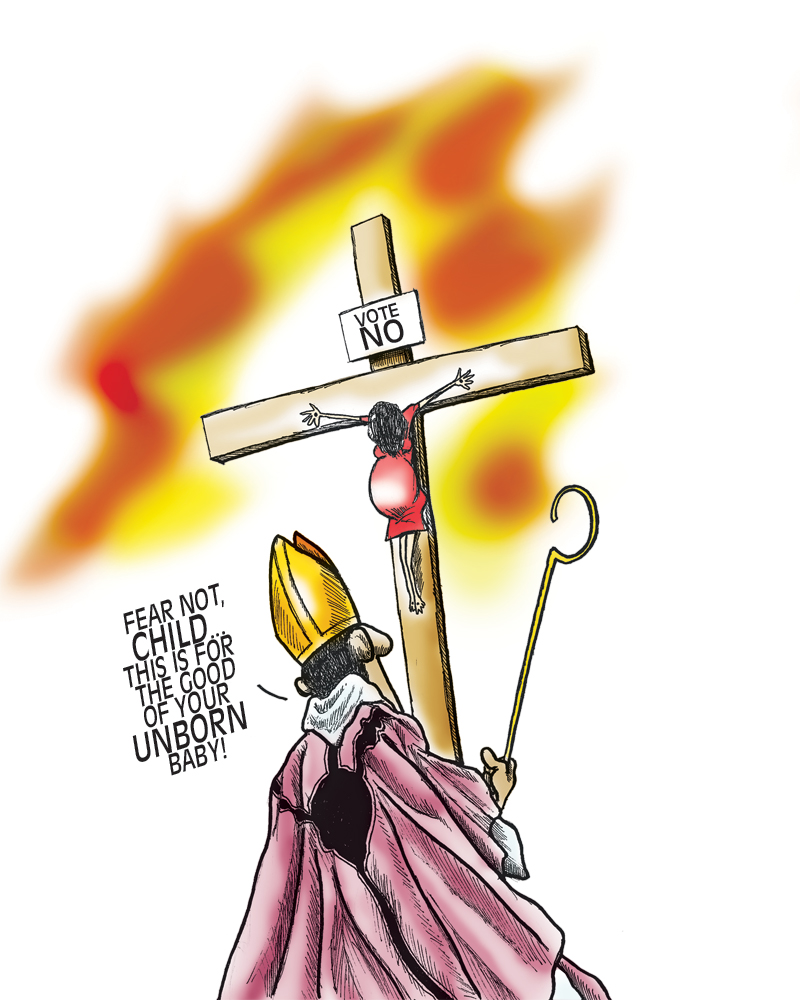
Last week, when retired Anglican Archbishop David Gitari warned the Kenyan church that it risked being defeated at the referendum if it maintains the "No" stand at the referendum on the Proposed Constitution, he underlined the fact that the country’s most venerable institution stands at a critical crossroads in its illustrious career.
The church objects to the section of Article 26 that empowers doctors to end a pregnancy if it endangers the woman’s life or she needs emergency treatment. Christian leaders are also opposed to the retention of Kadhis’ courts in the proposed Constitution under Article 169 and 170, which limit their authority to disputes over personal status, marriage, divorce or inheritance, where all the parties are Muslims and agree to take the case to a Kadhi.
However, with most players across the political spectrum, including civil society, rallying behind the draft, the church is being confronted with the awkward possibility of being on the wrong side of history. The situation has also raised fundamental questions regarding the historical role of religion in the country’s political development and whether it has been a force for change or a tool of appeasement.
In his introduction to Religion and Politics in Kenya: Essays in Honour of a Meddlesome Priest, Ben Knighton, who teaches at the Africa Studies Centre in the University of Oxford, notes that Evangelical Lutherans of the Church Missionary Society reached Buganda in 1877 closely followed by Roman Catholic missionary orders. The proposed Uganda Railway led to a host of missions from many denominations targeting the region, but faced with the Anglican–Roman Catholic duopoly in Uganda, they stopped off in the East African Protectorate that became Kenya Colony. In fact “in many localities of Kenya, it was the missionary who took up residence before the district officer.”
A 1998 article penned by Rev Dr Timothy Njoya states: “The first thing Christianity did in Africa was to make people surrender their sovereignty to church hierarchies and governments.” According to John Lonsdale, retired professor of Modern African History at the University of Cambridge and Fellow of Trinity College, the missionaries saw colonial rule as good for the natives, who, to them, appeared to be barbarous polygamists, afflicted by famine and disease — a savage and suffering people, for whom British rule was clearly a blessing.
When they did speak out against the heavy taxes and forced labour imposed on Africans for the benefit of white settlers, it was not out of outrage at a perceived injustice. Thinking African men guilty of sinful sloth, they had already concluded that forced labour was indeed a good thing, if properly supervised by a British official. They only proposed that those African men who could prove they had worked for themselves, and their families, for a season, be exempted from conscription. This was meant to protect their African converts, who were deemed to have been redeemed from their laziness.
It is ironic, therefore, that while the church for the most part desisted from openly criticising the injustices of colonialism, it nonetheless sired the leadership of the African nationalist movement. According to Knighton, the Church of Scotland, in Thogoto (Kikuyu for Scot) and the influential Anglican centre and mother church at Kabete between them created the Kiambu elite that became the African political establishment of Kenya, “right at the heart of the new nation, ensconced on the pleasant, greener side of the capital.”
In fact, not only was the future African nationalist leadership educated in mission schools, many of them were religiously inclined. Knighton points out that Bildad Kaggia was an itinerant preacher and both Jomo Kenyatta and Jaramogi Oginga Odinga remained deeply devoted their tribal African Instituted Churches to the end of their days.
As the national stature of these leaders grew, so did the profile of the Christian church. A recently released study of religion in sub-Saharan Africa shows a steep rise in the number of Christians between the 1950s and the 1970s accompanied by an equally precipitous drop in adherents to traditional religion. It was in this period that Kenya became a majority Christian country.
After independence, the Africanisation of the economy was mirrored by the ascent of Africans to the leadership of the church. According to Lonsdale, just as an educated political elite, wielding power along ethnic lines was emerging, so a clerical elite was created in the church, also segmented along tribal lines — a result of the colonial policy which permitted different missionary denominations to enjoy separate spheres of territorial, and tribal, influence to stave off religious strife.
With such a confluence of interests, the churches were initially reluctant to criticise the increasingly authoritarian bent of the Kenyatta government. According to Knighton, though the churches had in 1969 belatedly fulminated against Kenyatta’s oathing of the Kikuyu following Tom Mboya’s murder, no individual of the church challenged the nation and “those in authority” in the mass media till David Gitari’s radio sermons following the assassination of J.M. Kariuki in 1975.
When Daniel arap Moi ascended to power following the death of Kenyatta, he too was allowed a long honeymoon period despite the increasingly brutal nature of his dictatorship, especially following the 1982 coup attempt. In fact, when Rev Njoya kicked off the call for the “second independence” with his New Year's Day sermon in 1990, he was vilified even by some church leaders who would later become luminaries in the fight for democracy including the late Archbishop Manasses Kuria, who declared that “the church of the Province of Kenya supports President Moi and the one-party system." Njoya’s own church, the Presbyterian Church of East Africa, warned him against confrontational behaviour toward the government, reiterating the PCEA's unreserved support for President Moi and government.
Eventually though, the tide turned and, in the words of Galia Sabar-Friedman, “the church took upon itself the role of advocating democratisation in Kenya.” However, as Lonsdale observes, its motives may have been somewhat mixed. “Kenya’s churches first protested on behalf of their clerics and their flocks against the Moi regime’s abuses of power in the ‘queue-voting election’ of 1988, not on behalf of the Kenyan citizenry at large. In this they followed, if unknowingly, the example of the missionaries on the issue of forced labour 70 years before.”
Following the routing of Kanu in the 2002 elections, the churches again went AWOL. Knighton says they “lost their critical distance from government.” He singles out the general secretary of the National Council of Churches in Kenya and chairman of the Ufungamano Initiative, Mutava Musyimi, who, “having been a resolute opponent of President Moi was anything but with President Kibaki. Musyimi accepted high-level government appointments, such as chairman of the National Anti-Corruption Campaign Steering Committee, and did not resign after the shameful hounding out of John Githongo and the resignation of the director, Jane Kiragu, in February 2004.”
During the run-up to the 2007 general election, and the ensuing violence, the churches found themselves hopelessly split. According to Knighton, when Kofi Annan searched for a senior churchman of integrity and courage to enable a Kenyan solution to the post-election crisis, he couldn’t find one. They were all regarded as too compromised.
Rev Musyimi, who had resigned his church job, was running for parliament along with several other churchmen and women including Bishop Margaret Wanjiru and Pastor Pius Muiru, who also ran for the presidency. As reported in the Nation, some clergymen even admitted to blessing warriors to engage in violence and inviting politicians to disseminate hate messages that incited people against members of various communities.”
Gitari opposed the candidature of both Wanjiru, and Muiru saying, “Bishops and other ordained church leaders should not seek elective political positions.” He would later lament that “the state and the church have gone to bed together… the church has been compromised… the conscience of society has been wounded.”
Following this debacle, it was not till February 2009, at a nationally televised prayer meeting and fundraising for the Sachangwan and Nakumatt fires in which 160 people were burnt to death, that the churches found their voice, launching a blistering attack on both the president and the prime minister in an attempt to recover the high moral ground.
As the above history demonstrates, the Christian churches have not always, nor even often, stood on the side of ordinary Kenyans. While they have been a potent force for much positive change, it is instructive to note that they have accomplished this primarily in pursuit of their own selfish interests, and not the common welfare. When dictatorship has suited them, they have embraced it and kow-towed to its whims. Their current stand on the constitution should be understood in this light.
The church objects to the section of Article 26 that empowers doctors to end a pregnancy if it endangers the woman’s life or she needs emergency treatment. Christian leaders are also opposed to the retention of Kadhis’ courts in the proposed Constitution under Article 169 and 170, which limit their authority to disputes over personal status, marriage, divorce or inheritance, where all the parties are Muslims and agree to take the case to a Kadhi.
However, with most players across the political spectrum, including civil society, rallying behind the draft, the church is being confronted with the awkward possibility of being on the wrong side of history. The situation has also raised fundamental questions regarding the historical role of religion in the country’s political development and whether it has been a force for change or a tool of appeasement.
In his introduction to Religion and Politics in Kenya: Essays in Honour of a Meddlesome Priest, Ben Knighton, who teaches at the Africa Studies Centre in the University of Oxford, notes that Evangelical Lutherans of the Church Missionary Society reached Buganda in 1877 closely followed by Roman Catholic missionary orders. The proposed Uganda Railway led to a host of missions from many denominations targeting the region, but faced with the Anglican–Roman Catholic duopoly in Uganda, they stopped off in the East African Protectorate that became Kenya Colony. In fact “in many localities of Kenya, it was the missionary who took up residence before the district officer.”
A 1998 article penned by Rev Dr Timothy Njoya states: “The first thing Christianity did in Africa was to make people surrender their sovereignty to church hierarchies and governments.” According to John Lonsdale, retired professor of Modern African History at the University of Cambridge and Fellow of Trinity College, the missionaries saw colonial rule as good for the natives, who, to them, appeared to be barbarous polygamists, afflicted by famine and disease — a savage and suffering people, for whom British rule was clearly a blessing.
When they did speak out against the heavy taxes and forced labour imposed on Africans for the benefit of white settlers, it was not out of outrage at a perceived injustice. Thinking African men guilty of sinful sloth, they had already concluded that forced labour was indeed a good thing, if properly supervised by a British official. They only proposed that those African men who could prove they had worked for themselves, and their families, for a season, be exempted from conscription. This was meant to protect their African converts, who were deemed to have been redeemed from their laziness.
It is ironic, therefore, that while the church for the most part desisted from openly criticising the injustices of colonialism, it nonetheless sired the leadership of the African nationalist movement. According to Knighton, the Church of Scotland, in Thogoto (Kikuyu for Scot) and the influential Anglican centre and mother church at Kabete between them created the Kiambu elite that became the African political establishment of Kenya, “right at the heart of the new nation, ensconced on the pleasant, greener side of the capital.”
In fact, not only was the future African nationalist leadership educated in mission schools, many of them were religiously inclined. Knighton points out that Bildad Kaggia was an itinerant preacher and both Jomo Kenyatta and Jaramogi Oginga Odinga remained deeply devoted their tribal African Instituted Churches to the end of their days.
As the national stature of these leaders grew, so did the profile of the Christian church. A recently released study of religion in sub-Saharan Africa shows a steep rise in the number of Christians between the 1950s and the 1970s accompanied by an equally precipitous drop in adherents to traditional religion. It was in this period that Kenya became a majority Christian country.
After independence, the Africanisation of the economy was mirrored by the ascent of Africans to the leadership of the church. According to Lonsdale, just as an educated political elite, wielding power along ethnic lines was emerging, so a clerical elite was created in the church, also segmented along tribal lines — a result of the colonial policy which permitted different missionary denominations to enjoy separate spheres of territorial, and tribal, influence to stave off religious strife.
With such a confluence of interests, the churches were initially reluctant to criticise the increasingly authoritarian bent of the Kenyatta government. According to Knighton, though the churches had in 1969 belatedly fulminated against Kenyatta’s oathing of the Kikuyu following Tom Mboya’s murder, no individual of the church challenged the nation and “those in authority” in the mass media till David Gitari’s radio sermons following the assassination of J.M. Kariuki in 1975.
When Daniel arap Moi ascended to power following the death of Kenyatta, he too was allowed a long honeymoon period despite the increasingly brutal nature of his dictatorship, especially following the 1982 coup attempt. In fact, when Rev Njoya kicked off the call for the “second independence” with his New Year's Day sermon in 1990, he was vilified even by some church leaders who would later become luminaries in the fight for democracy including the late Archbishop Manasses Kuria, who declared that “the church of the Province of Kenya supports President Moi and the one-party system." Njoya’s own church, the Presbyterian Church of East Africa, warned him against confrontational behaviour toward the government, reiterating the PCEA's unreserved support for President Moi and government.
Eventually though, the tide turned and, in the words of Galia Sabar-Friedman, “the church took upon itself the role of advocating democratisation in Kenya.” However, as Lonsdale observes, its motives may have been somewhat mixed. “Kenya’s churches first protested on behalf of their clerics and their flocks against the Moi regime’s abuses of power in the ‘queue-voting election’ of 1988, not on behalf of the Kenyan citizenry at large. In this they followed, if unknowingly, the example of the missionaries on the issue of forced labour 70 years before.”
Following the routing of Kanu in the 2002 elections, the churches again went AWOL. Knighton says they “lost their critical distance from government.” He singles out the general secretary of the National Council of Churches in Kenya and chairman of the Ufungamano Initiative, Mutava Musyimi, who, “having been a resolute opponent of President Moi was anything but with President Kibaki. Musyimi accepted high-level government appointments, such as chairman of the National Anti-Corruption Campaign Steering Committee, and did not resign after the shameful hounding out of John Githongo and the resignation of the director, Jane Kiragu, in February 2004.”
During the run-up to the 2007 general election, and the ensuing violence, the churches found themselves hopelessly split. According to Knighton, when Kofi Annan searched for a senior churchman of integrity and courage to enable a Kenyan solution to the post-election crisis, he couldn’t find one. They were all regarded as too compromised.
Rev Musyimi, who had resigned his church job, was running for parliament along with several other churchmen and women including Bishop Margaret Wanjiru and Pastor Pius Muiru, who also ran for the presidency. As reported in the Nation, some clergymen even admitted to blessing warriors to engage in violence and inviting politicians to disseminate hate messages that incited people against members of various communities.”
Gitari opposed the candidature of both Wanjiru, and Muiru saying, “Bishops and other ordained church leaders should not seek elective political positions.” He would later lament that “the state and the church have gone to bed together… the church has been compromised… the conscience of society has been wounded.”
Following this debacle, it was not till February 2009, at a nationally televised prayer meeting and fundraising for the Sachangwan and Nakumatt fires in which 160 people were burnt to death, that the churches found their voice, launching a blistering attack on both the president and the prime minister in an attempt to recover the high moral ground.
As the above history demonstrates, the Christian churches have not always, nor even often, stood on the side of ordinary Kenyans. While they have been a potent force for much positive change, it is instructive to note that they have accomplished this primarily in pursuit of their own selfish interests, and not the common welfare. When dictatorship has suited them, they have embraced it and kow-towed to its whims. Their current stand on the constitution should be understood in this light.